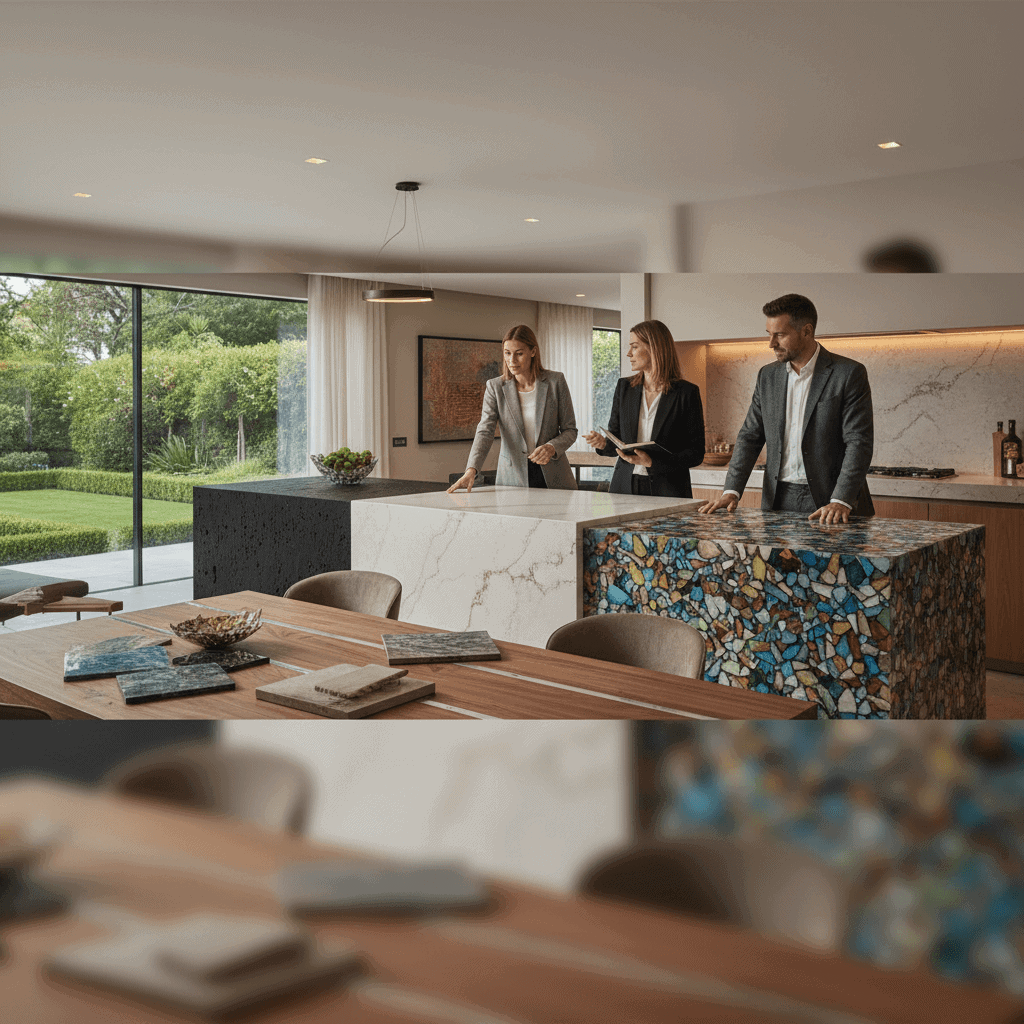
Kitchens stand out as the busiest spots in many homes, with countertops serving as the center where style crashes into daily life. Fine Homes shares the freshest kitchen counter trends, showing how materials, colors, and real needs shape how kitchens look this season. This text dives into the coolest countertop styles, breaks down how they hold up to daily use, and gives tips on choosing the right surface for your lifestyle. Learning about these trends helps anyone wanting a kitchen that stays sharp and keeps pace with the daily grind—stick around to find out which countertop fits your world just right.
The goal here is to give clear, usable information you can apply when planning a remodel or shopping for a single run of new counters. You will find maintenance tips, budget ranges, pairing ideas for islands and backsplashes, and pointers on where to see quality installations in person.
Fine Homes Reveals Latest Kitchen Counter Trends Overview
Across recent projects there are three clear directions that keep reappearing. First, consumers want materials that look natural and age gracefully. Second, engineered surfaces are taking a larger share thanks to their color range and low upkeep needs. Third, sustainability is moving from niche to mainstream with recycled and low impact options. Each approach answers a different homeowner priority so the best choice depends on how you use the kitchen.
Below I break down each trend with examples, cost expectations, and practical tips for long term care. Where helpful I include pairing ideas and sample maintenance routines so you can imagine the countertop as part of a working kitchen not just a photo.
Trend 1 Natural Stone Surfaces Take Center Stage
Natural stone such as marble, granite, and quartzite remain highly sought after for their unique veins and surface depth. Many homeowners choose natural stone for focal areas like islands or breakfast bars because the material reads as rich and textural. Granite is known for heat resistance and longevity. Marble offers distinct veining that photographers love. Quartzite provides the look of marble with improved scratch resistance.
Benefits and trade offs
- Visual interest Each slab is unique which creates a signature look.
- Longevity Well sealed stone can last decades with basic care.
- Maintenance Porous stones need sealing on a regular schedule. For heavy cooks that can be quarterly or annually depending on use and sealant type.
- Cost range Entry level granite starts in the mid price range while rare veined marbles and quartzites command higher prices.
Practical tips
- Choose a honed finish for a softer look that hides small scratches better than a polished finish.
- Test sealers on a sample slab before buying larger quantities. Some sealers alter surface sheen slightly.
- Consider using stone for island surfaces where impact of spills and cutting is easier to manage, and pair with a more durable perimeter material if you need a low maintenance option.
Trend 2 Engineered Quartz Offers Wide Color Range and Durable Surfaces
Engineered quartz continues to grow in popularity for homeowners who want consistent color and very low maintenance. Manufactured quartz is made from crushed quartz and binding resin so it can mimic marble or present a uniform field of color without natural variation. This makes it ideal for modern kitchens where clean lines and uniform finishes are desired.
Performance and selection tips
- Stain resistance Non porous surfaces resist staining from wine, oils, and acidic foods.
- Scratch resistance Quartz resists scratches well though trivets are still recommended for hot cookware.
- Color and pattern You can select from veined looks to solid tones which helps coordinate with cabinets and flooring.
- Budget Mid to high depending on brand and pattern complexity.
Choosing finishes for daily use
A polished finish is bright and shows underlying patterns clearly. A matte or satin finish hides fingerprints and water spots better. For busy family kitchens a satin finish in a mid tone offers a practical balance between appearance and maintenance.
Maintenance routine
Cleaning is straightforward. Use mild soap and water for day to day wiping. Avoid products with abrasive pads or strong acids. For stubborn marks use a non abrasive cleaner recommended by the manufacturer. Avoid direct contact with high heat to prevent potential damage to the resin binder.
Trend 3 Sustainable and Recycled Countertops Gain Traction
Environmental concerns influence material decisions more each year. Recycled glass, paper composite, and porcelain made from reclaimed materials are appealing for homeowners who want lower impact choices without sacrificing style. These surfaces range from artisan textured looks to sleek, uniform slabs.
What to expect
- Unique appearances Recycled glass counters can sparkle with embedded color fragments which adds depth when light hits the surface.
- Durability Many recycled options are engineered to perform like traditional surfaces though care instructions vary by manufacturer.
- Eco credentials Look for third party certifications and clear information about recycled content percentage and manufacturing processes.
Buying advice
- Ask suppliers about lifecycle statements and how the material handles heat and stains.
- Request samples to view under your kitchen lighting to ensure color and texture match expectations.
Mixing Materials and Functional Layouts for Busy Kitchens
One of the strongest practical trends is mixing materials to suit different tasks. Instead of a single material across every counter surface homeowners are choosing durable surfaces for prep zones and more decorative materials for islands and serving areas.
Materials pairing tips
- Use a durable quartz for prep countertops because it resists stains and requires little care.
- Reserve natural stone for islands where visual impact is more important and wear is manageable.
- Consider a butcher block segment for a dedicated chopping area. It is forgiving to knives and can be sanded and oiled as needed.
Layout suggestions for function
- Place the main prep surface close to the sink and refrigerator to streamline cooking tasks.
- Designate a baking zone with clear, heat tolerant counters and nearby storage for measuring tools and mixers.
- Include a small landing area near the range for plating and quick resting of hot pans.
How to Choose the Right Countertop for Your Home
Choosing the right countertop starts with honest questions about how the kitchen is used. Do you prepare many meals from scratch, or is the space more for socializing? Do young children use the counters for crafts or homework? Answers to these questions help narrow material options quickly.
Decision checklist
- Usage profile Heavy cooking favors low maintenance, high durability materials.
- Visual priorities If visual drama is the priority consider reserving eye catching stone for focal surfaces.
- Budget plan Factor in installation, edge treatments, and long term maintenance when comparing costs.
- Resale Neutral tones and proven performance materials tend to appeal to a wide range of buyers if resale is a concern.
Work with a fabricator early in the process for accurate measurements and to check options for edge profiles. A simple ogee edge might add cost without adding function while a straight eased edge is economical and modern. Always request full slabs or large samples where possible since small swatches can be misleading.
Where to See These Trends In Action
If you want to view installed examples and read case studies a regional publication ran a helpful piece that covers three standout countertop directions and includes imagery and installer quotes. For a close look at recent projects and recommendations consult Fine Homes and Living which highlights material use in real remodels and provides links to local vendors.
Visiting showrooms and completed remodels provides a reality check. Lighting, adjacent finishes, and nearby cabinet colors can change how a surface reads compared with a catalog photo. Bring your samples to a showroom and request to see completed installations or ask for fabricator references to visit in person.
Budgeting and Timelines for Countertop Projects
Plan for lead times and installation steps when budgeting. Material availability can affect timeline especially for exotic stone or large format slabs. Typical project phases include templating, fabrication, and installation. Templating often happens once cabinets are in place so allow room in your schedule for that step.
- Lead time Standard materials often ship in a few weeks. Special order slabs can take longer.
- Installation window Fabrication and install is usually completed within a few days once templating is done but complex jobs can require staged work.
- Extra costs Remember to factor in sink mounting, cutouts for cooktops, and seam treatment into your estimate.
Obtain at least three quotes that include all work items. Compare like for like including edge profiles, sink types, and installation practices rather than just per square foot figures.
From material selection to maintenance habits each choice affects how a kitchen functions and feels. The right countertop supports daily tasks while reflecting your taste.
Conclusion
Fine Homes Reveals Latest Kitchen Counter Trends provides a clear look at where homeowners are placing emphasis when selecting surfaces. Natural stone continues to appeal for its unique visual depth. Engineered quartz is preferred for people who want a wide range of colors with very low maintenance. Sustainable countertops offer distinctive looks with reduced environmental impact and are increasingly practical for everyday kitchens. Choosing the right surface depends on how the space will be used, how much maintenance you are willing to accept, and how the counters will coordinate with storage and appliances. For best results visit showrooms, request large samples, and work with a trusted fabricator to schedule templating and install. If you are planning a remodel start by mapping how you use the work areas and set a realistic budget that includes installation and any extra features like integrated sinks or specialty edges. Ready to take the next step Evaluate your usage profile and collect samples to compare in your own light. Then contact local suppliers for quotes and ask to view finished jobs. A careful approach will help you choose a surface that performs well and looks right for years.